Designing Human Connection Across a Distributed Workforce
Overview
As our organization shifted toward a more distributed workforce, with team members spanning multiple time zones and work environments, a new challenge emerged: maintaining a strong sense of connection, visibility, and inclusion across the team. The Coast to Coast Cards initiative was created to address this gap by transforming how employees see and engage with one another. Instead of relying on static directories or org charts, the project introduced a more human-centered approach—one that makes individuals visible, relatable, and easy to connect with across distances.
Problem
The core problem centered around a lack of awareness and connection in a hybrid environment. Teams had limited visibility into who their coworkers were beyond job titles, and fewer opportunities existed for organic relationship building. Time zone differences added friction to collaboration, often creating disconnects in communication and scheduling. Traditional internal tools failed to capture personality or context, leaving employees feeling fragmented rather than unified.
Objective
The objective was to design a scalable, low-friction solution that would increase awareness, humanize employees, and foster inclusivity across geographic boundaries. The solution needed to work seamlessly in both physical and digital spaces while remaining simple enough to adopt quickly across the organization.
Solution
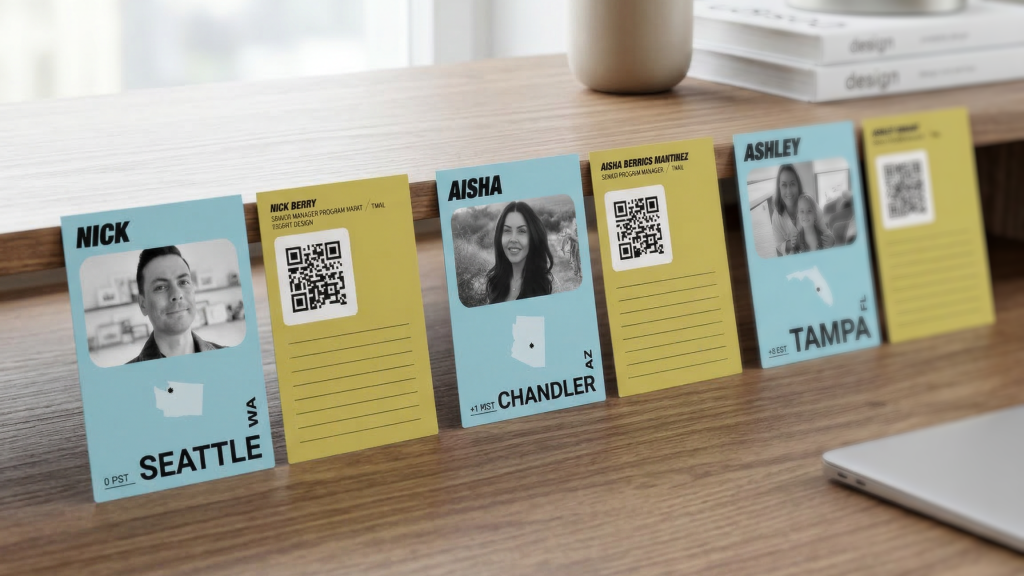
The approach was grounded in a simple idea: make people visible, approachable, and memorable. I designed a set of Coast to Coast Cards—physical cards representing each employee, paired with a digital experience accessed through a QR code. Each card features key information such as name, role, location, and time zone, providing immediate context for collaboration. On the back, a QR code links to a personalized digital profile where deeper storytelling lives, including background, interests, and additional context that brings each individual to life beyond their role.
Design Thinking
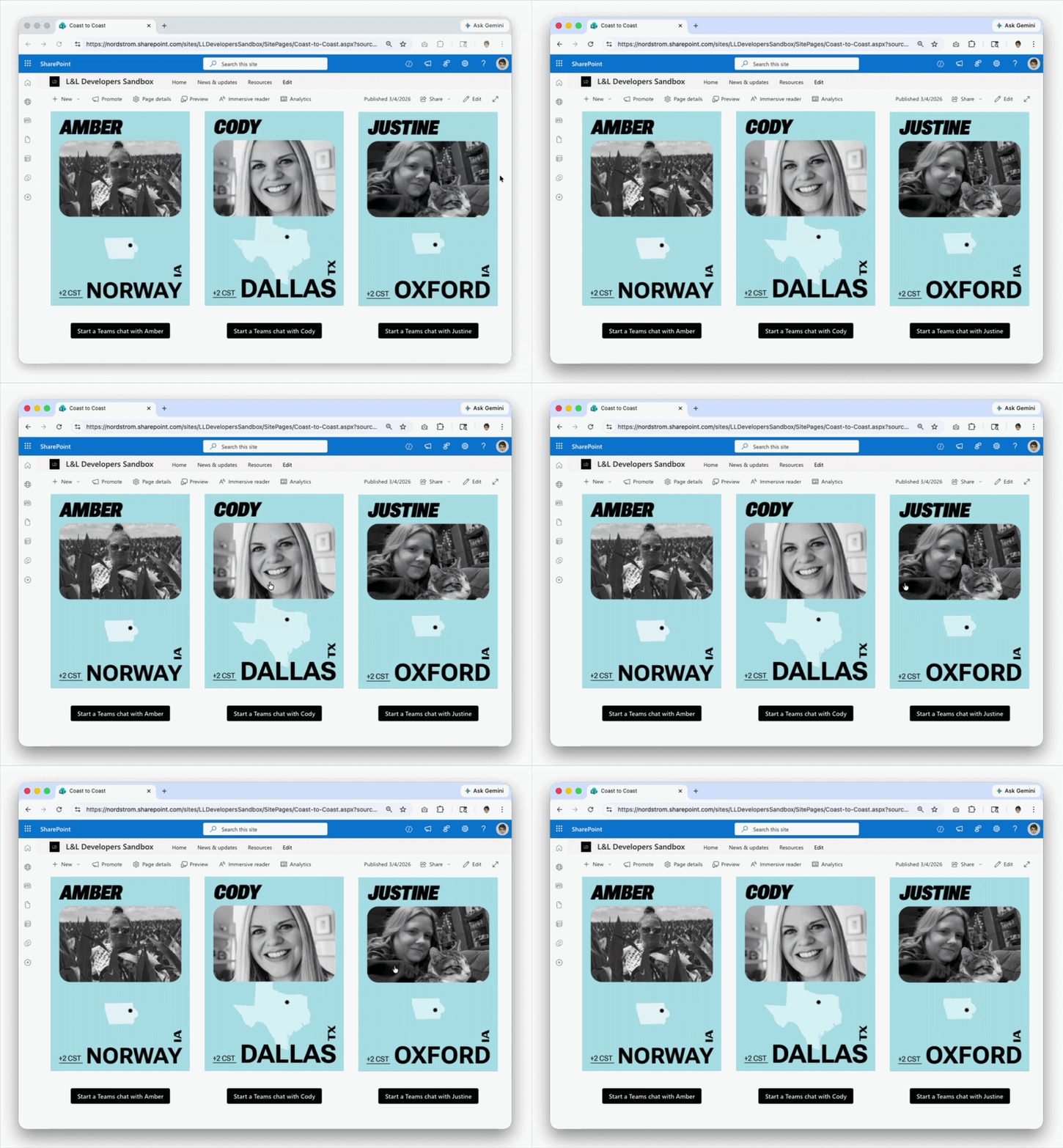
From a design perspective, the solution focused heavily on human-centered principles. The goal was not just to share information, but to create a sense of recognition and inclusion. QR codes were intentionally used to reduce friction, allowing instant access to profiles without requiring navigation through internal systems. Including time zones directly on the cards introduced an element of empathy into daily workflows, helping teams collaborate more thoughtfully across regions. The system was also designed to scale, making it easy to onboard new employees and maintain consistency over time.
Impact
The impact of the Coast to Coast Cards was immediate and meaningful. Team members gained a clearer understanding of who they work with across locations, which led to increased interaction and stronger cross-team relationships. The cards sparked conversations and created new points of connection, especially between employees who may not typically engage. Most importantly, remote employees felt more visible and included in the broader team culture.
Key Takeaways
This work reinforced the importance of designing for human connection, not just functionality. It highlighted how blending physical and digital experiences can deepen engagement, and how internal tools—when designed with intention—can shape culture just as much as external products.