Transforming hours of raw footage into searchable, usable content at scale
Overview
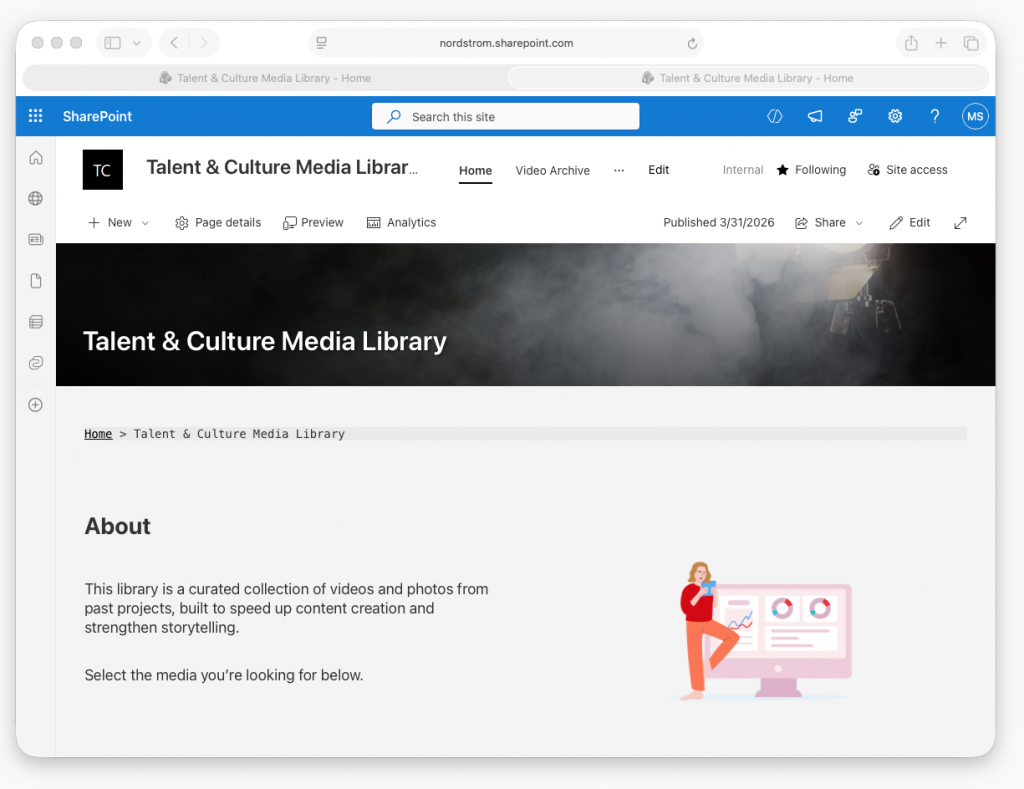
At Nordstrom, valuable video content was being captured across events, leadership sessions, and internal productions—but much of it remained underutilized after its initial use. Teams struggled to access, navigate, and repurpose this content efficiently. I led the creation of an AI-Powered Media Hub, a centralized system that transforms long-form video into searchable, structured, and actionable content. By leveraging AI to extract transcripts, identify themes, and organize media, the platform enables users to quickly discover relevant moments and accelerate content creation workflows.
The Problem
We were sitting on hours of high-value footage from partnered events like leadership offsites and internal productions, but there was no efficient way to access or reuse it. Users had to scrub through entire videos to find relevant clips, which was time-consuming and often unrealistic. As a result, content that could have been repurposed for training, storytelling, or internal communications was largely overlooked. There was also no standardized way to extract insights or themes from video, making discovery inconsistent and dependent on who originally created the content.
The Goal
The goal was to create a system that makes video content discoverable, searchable, and reusable. Users needed to be able to quickly find relevant moments, explore themes like leadership or culture, and take action—whether that meant sharing a clip, building a new video, or submitting a request for production support. The system needed to reduce friction, unlock the value of existing media, and scale content usage without requiring additional production effort.
My Approach
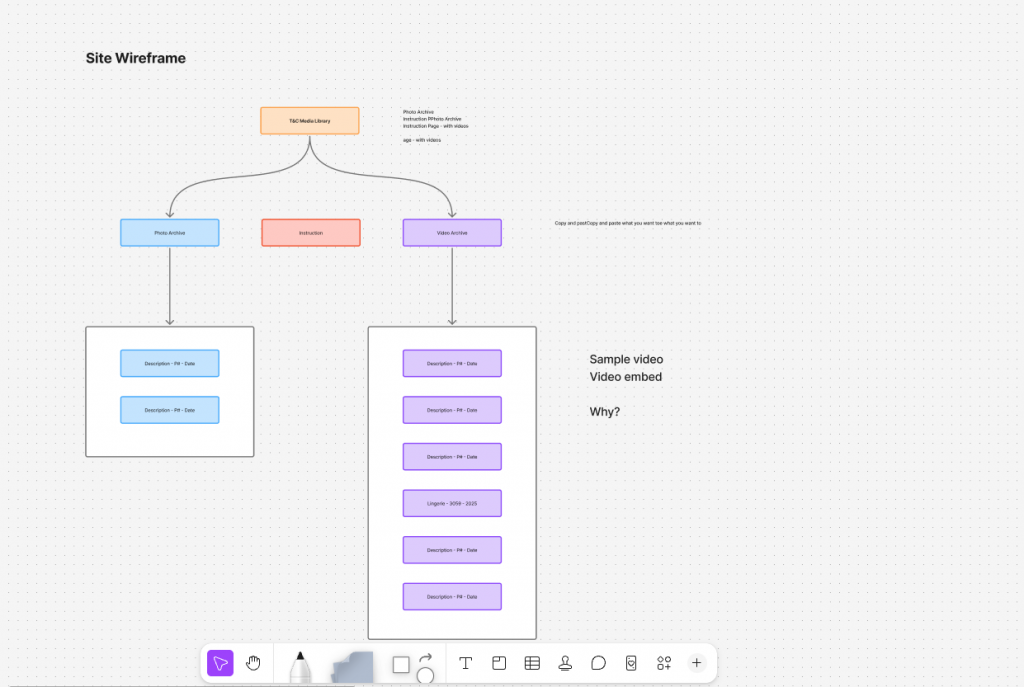
I approached this as a content discovery and UX challenge. Instead of treating video as a static asset, I reframed it as a dynamic, searchable dataset. I focused on designing an experience that allows users to move seamlessly from exploration to action. The system ingests raw video, generates transcripts using AI, and identifies key themes and segments within the content. From there, users can search, scan, and navigate directly to the most relevant moments without needing to watch full videos. The experience was designed to feel intuitive and immediate, reducing the cognitive load typically associated with video discovery.
AI Integration
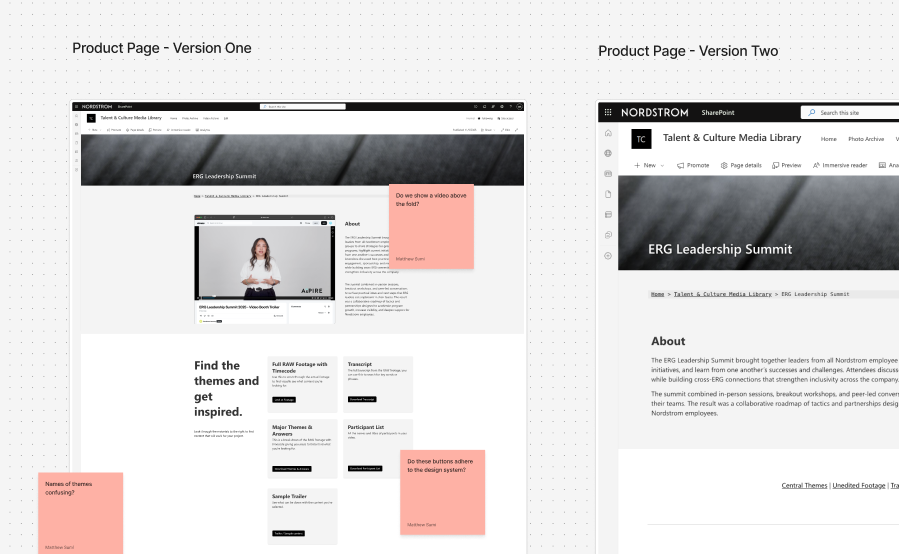
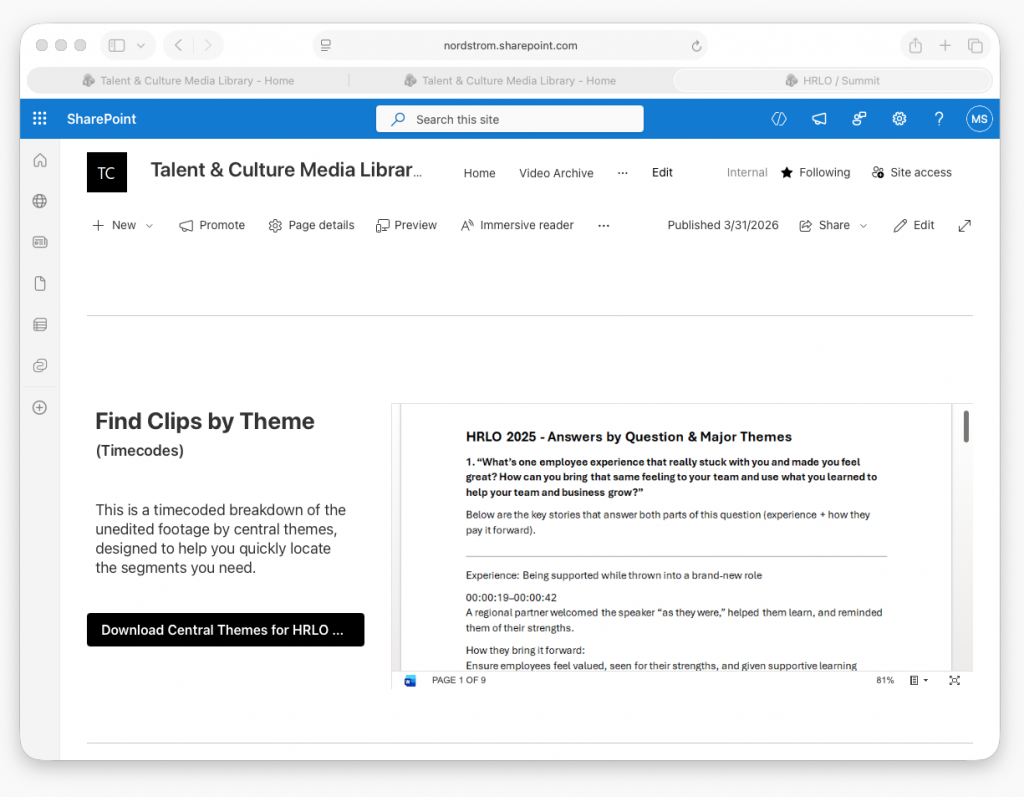
AI plays a central role in transforming raw footage into usable content. Once video is uploaded, transcripts are automatically generated and analyzed to surface key topics and themes. These themes act as entry points for users, allowing them to quickly explore content by subject rather than by file name or date. AI also enables timestamp-level navigation, so users can jump directly to the most relevant parts of a video. This dramatically reduces the time required to find meaningful content and unlocks new ways to interact with media.
Experience Design
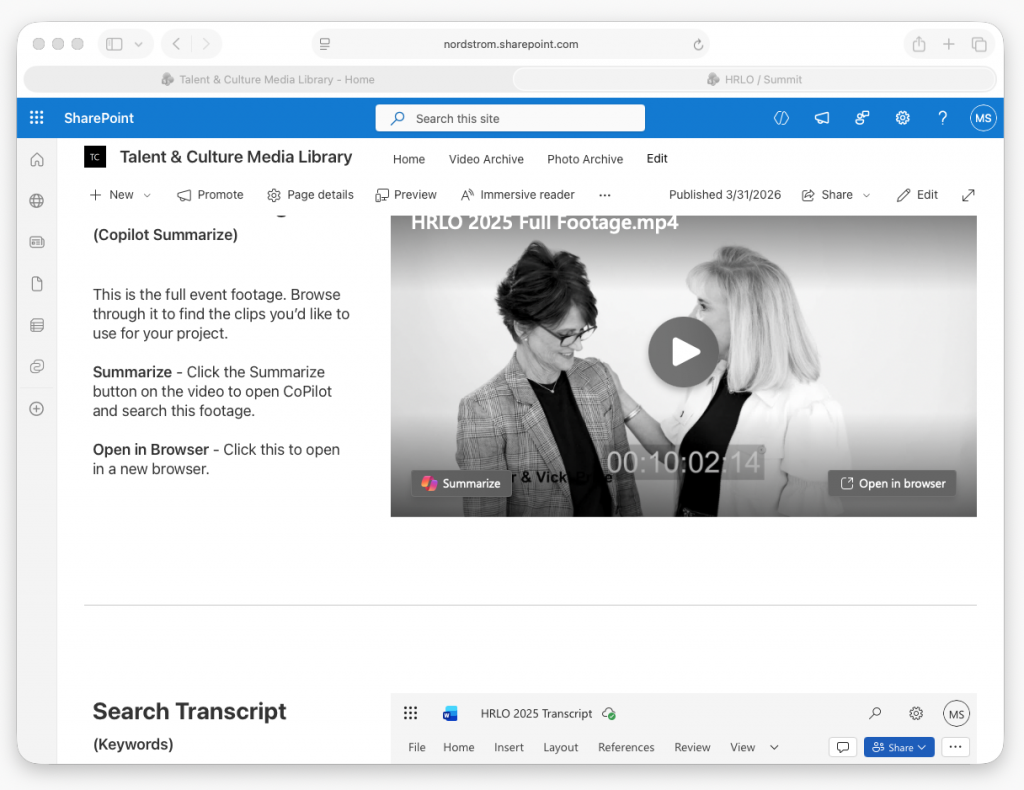
The Media Hub was designed with a strong emphasis on usability and speed. Users can search by keyword, browse by theme, or explore curated content collections. Once inside a video, they can read transcripts, scrub through highlighted sections, or jump to specific moments tied to key ideas. The system bridges the gap between passive viewing and active discovery, allowing users to engage with content in a way that aligns with their needs and time constraints. Clear pathways are built in for next steps, whether that’s downloading clips, sharing content, or initiating a new project.
System & Workflow Integration
The Media Hub connects directly into the broader content ecosystem. Once users identify relevant themes or clips, they can take immediate action—either by using the content themselves or by submitting a request for the creative team to develop something more polished. This creates a seamless flow from discovery → decision → creation, reducing bottlenecks and ensuring that valuable content doesn’t sit unused. The system complements existing tools and workflows rather than replacing them, enhancing efficiency across the board.
Impact
The AI-Powered Media Hub unlocked the value of previously underutilized content and significantly reduced the time required to find and repurpose video. It empowered teams to move faster, make better use of existing assets, and create more targeted, relevant content. By turning video into a searchable and actionable resource, the system increased engagement with media and extended the lifespan of every production. It also positioned the creative team to focus on higher-value work by reducing redundant requests and enabling smarter intake.
Key Takeaways
This work demonstrated that the biggest barrier to content utilization is not creation—it’s discovery. By applying AI and UX principles, video can be transformed from a passive format into an interactive, searchable experience. Treating media as data unlocks entirely new workflows and efficiencies. The success of the Media Hub came from simplifying access, reducing friction, and designing for how people actually want to engage with content.
My Role
I led the strategy, UX design, and system development for the AI-Powered Media Hub. I defined the experience from ingestion through discovery and action, integrated AI-driven transcription and thematic tagging, and designed the user interface and workflows. I partnered with team to align the system with real business needs and ensured it delivered both immediate value and long-term scalability.